Sleeves can change the character of a wedding dress. The same neckline and skirt can feel romantic, modern, dramatic, modest, or relaxed depending on what happens at the shoulder and arm. Beyond appearance, sleeve choice affects warmth, coverage, mobility, and comfort while hugging guests, holding a bouquet, or dancing.
That makes comparing wedding dress sleeve styles about more than choosing a pretty detail. The best option should suit the gown’s fabric and proportions, the season and venue, and the way you want to move through the day.
Cap Sleeves: Delicate Coverage at the Shoulder
Cap sleeves sit just over the top of the shoulder without extending far down the upper arm. They are often cut from lace, tulle, or the same fabric as the bodice, giving a sleeveless silhouette a softer finish while keeping most of the arm uncovered.
They work particularly well on romantic and vintage-inspired gowns. Fit is important, though. A cap sleeve that is too tight can pull when you reach forward or lift your arms, so test movement rather than judging the dress only while standing still.
Short Sleeves: An Easy Middle Ground
Short sleeves generally extend farther than cap sleeves and finish somewhere on the upper arm. They are among the most versatile bridal sleeve styles because they give noticeable coverage without the warmth or visual weight of a full sleeve.
A clean fitted sleeve can make satin or crepe feel modern and understated, while lace or embroidered versions lean more traditional. If you like extra coverage but think a long sleeve wedding dress may feel too warm, a short sleeve can be an excellent compromise.
Long Sleeves: Elegant Coverage in Different Fabrics
Long sleeves usually extend to the wrist, but their effect changes dramatically with fabric. Opaque crepe creates a sleek, minimalist line; lace brings texture and romance; and sheer tulle can give the impression of coverage while keeping the overall look light.
Long sleeves suit cool-weather ceremonies and formal settings, but they are not limited to winter weddings. Lightweight lace or mesh can work in mild temperatures. During fittings, bend your elbows, reach forward, lift your arms to shoulder height, and mimic a hug. If the sleeve pulls across the back or underarm, alterations may be needed.
Illusion Sleeves: Sheer Fabric With Floating Detail
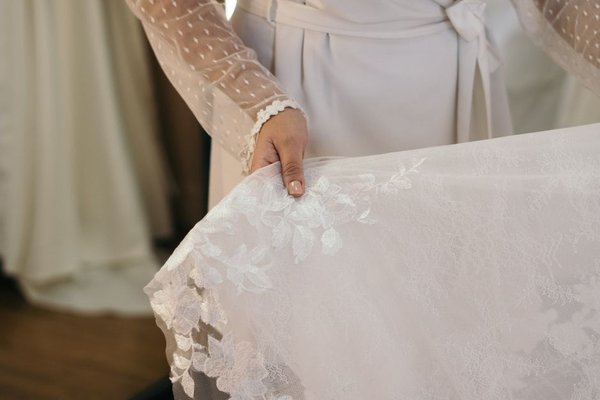
Illusion sleeves use sheer fabric, usually fine tulle or mesh, with lace, appliqué, beading, or embroidery placed over it. From a distance, the decoration can appear to float directly on the skin.
Illusion sleeves can be long, short, or three-quarter length, so the term describes the sheer construction rather than one fixed shape. Check that the mesh lies smoothly around the wrist and underarm. Fine tulle is delicate, so notice whether jewelry or rough embellishment could catch against it.
Puff Sleeves: From Soft Romance to Statement Volume
A puff sleeve wedding dress gathers fabric around the shoulder, upper arm, or both. The volume may be small and softly rounded or intentionally oversized for a high-fashion effect.
Fabric determines much of the mood. Organza holds a crisp shape, while softer tulle creates a lighter, cloud-like look. Puff sleeves pair especially well with simple bodices because the sleeve becomes a focal point. Detachable puff sleeves can also create a dramatic ceremony look and a cleaner, sleeveless feel for the reception.
Flutter Sleeves: Lightness and Movement
Flutter sleeves fall loosely from the shoulder instead of fitting around the arm. Chiffon, lace, and soft tulle allow the fabric to move as you walk, giving the gown an airy quality that suits garden, beach, and relaxed outdoor weddings.
If you are marrying outside, test them in motion. Very light fabric can shift in wind, so walk quickly, turn, and raise your arms during a fitting to see whether the sleeve stays comfortable and photographs the way you expect.
Bell Sleeves: A Flared, Romantic Shape
Bell sleeves are narrower near the shoulder and flare toward the lower arm. In lace they can feel romantic or bohemian; in cleaner fabrics they can look more sculptural and dramatic.
The wider the cuff, the more you should think about practical details such as eating, carrying a bouquet, and moving around candles or table settings. A modest flare beginning below the elbow can deliver the same visual idea with less fabric to manage.
Three-Quarter and Bishop Sleeves
Three-quarter sleeves finish between the elbow and wrist. They provide more coverage than short sleeves but keep the lower arm visible, which can make the silhouette feel lighter and leave room for a bracelet.
Bishop sleeves are fuller through the arm and gathered into a fitted cuff. In chiffon, organza, or sheer tulle, they offer a softer alternative to close-fitting long sleeves and add movement without making the gown feel heavy.
How to Choose the Right Sleeve
Start with the balance of the gown. A heavily embellished bodice may look best with a simpler sleeve, while a minimalist dress can handle more volume or texture. Fabric matters just as much: structured materials create sharper shapes, while lace, tulle, and chiffon usually produce a softer effect.
Use season and venue as comfort guides rather than strict rules. A summer bride can wear long illusion sleeves if the fabric is light and breathable, while a winter bride may prefer short sleeves with a wrap or cape.
Most importantly, test real movements. Sit down, reach for an imaginary bouquet, lift your arms, bend your elbows, and hug someone. If a sleeve scratches, twists, pinches, or limits your range of motion in the fitting room, it is likely to become more noticeable after several hours.
When comparing the rest of the gown, useful related topics include wedding dress fabrics, bridal gown silhouettes, and wedding dress neckline styles.
Frequently Asked Questions
What wedding dress sleeve style is most comfortable?
Comfort depends more on fit, fabric, and armhole construction than sleeve length alone. Loose flutter or short sleeves often allow easy movement, while well-fitted stretch lace or soft illusion sleeves can also be comfortable for long wear.
Are long sleeves only for winter weddings?
No. Heavy opaque sleeves provide more warmth, but lightweight lace, tulle, and illusion sleeves can work in spring or mild summer conditions. Venue temperature and fabric weight matter more than the season name by itself.
Can sleeves be added to a sleeveless wedding dress?
Often, yes. A bridal alterations specialist may be able to add cap, short, lace, or illusion sleeves, but the result depends on the neckline, armhole, bodice structure, and availability of matching fabric. Ask before buying if added sleeves are important to you.
Are detachable sleeves practical?
They can be, provided the attachment is secure and comfortable. Detachable puff, lace, or off-the-shoulder sleeves let you change the look between the ceremony and reception without changing dresses.
Finding the Sleeve That Feels Right
The best sleeve supports both the look you want and the way you plan to move through your wedding day. Cap and short sleeves offer light coverage, long and illusion sleeves create elegance, puff sleeves add volume, and flutter or bell sleeves bring movement. Compare styles on your body, pay attention to the shoulder, underarm, elbow, and wrist, and choose the option that still lets you celebrate comfortably.