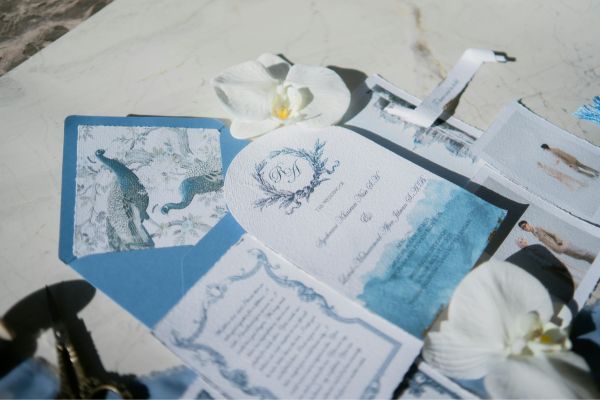
Addressing wedding invitations can feel surprisingly personal. It is one of those small wedding tasks that looks simple at first, then suddenly becomes full of questions. Should you use titles? Do children go on the envelope? What about unmarried couples, doctors, widows, divorced parents, or guests with different last names? The wording on the envelope may seem like a tiny detail, but it sets the tone before the invitation is even opened.
Good wedding invitation address etiquette is really about clarity, respect, and warmth. It helps guests understand who is invited, how formal the celebration feels, and whether they may bring a partner or their children. The goal is not to sound stiff or old-fashioned. It is to make every guest feel properly acknowledged.
Why Address Etiquette Still Matters
In a world of text messages, group chats, and quick digital replies, a formal invitation still feels special. The envelope is the first physical piece of the wedding that guests hold in their hands. When it is addressed thoughtfully, it gives the invitation a polished and intentional feeling.
Etiquette also helps avoid awkward confusion. A guest who receives an invitation addressed only to them will usually understand that the invitation does not include a plus-one. A family name on the envelope makes it clear that children are invited. A carefully written couple’s name shows that you have considered their relationship and identity.
Of course, etiquette today is more flexible than it once was. Couples no longer have to follow every traditional rule exactly. Still, understanding the basics gives you a helpful foundation. From there, you can choose what feels right for your wedding style and your guests.
Formal vs. Informal Addressing
Before writing envelopes, decide how formal you want the overall invitation suite to feel. A black-tie wedding at a grand venue may call for traditional titles, full names, and carefully written addresses. A backyard wedding or relaxed coastal celebration may feel more natural with first and last names only.
A formal outer envelope might read “Mr. and Mrs. Jonathan Miller,” while a more modern version might say “Jonathan and Emily Miller.” Neither is wrong. They simply create different moods.
The key is consistency. If you use titles for one married couple, it usually looks better to use titles throughout the guest list. If you choose a modern style without honorifics, keep that approach steady. Mixed formatting can make the invitation list feel rushed, even when the design is beautiful.
Addressing Married Couples With the Same Last Name
For a traditional approach, a married couple with the same last name may be addressed as “Mr. and Mrs. Daniel Thompson.” This style is still common for very formal weddings, though some couples prefer not to use the husband’s full name for both people.
A more contemporary and personal option is “Mr. Daniel Thompson and Mrs. Rachel Thompson.” You can also write “Daniel and Rachel Thompson” if your wedding style is less formal. This version feels clear, respectful, and modern without losing elegance.
If one person has a professional title, such as Doctor, that title may come first. For example, “Dr. Rachel Thompson and Mr. Daniel Thompson” is appropriate when Rachel holds the title. The same idea applies if both people have professional titles.
Addressing Married Couples With Different Last Names
Many married couples keep separate last names, and the envelope should reflect that. Write each person’s full name on the same line if space allows, or on separate lines if the names are long.
A formal version might read “Ms. Sarah Collins and Mr. David Reyes.” A modern version might simply say “Sarah Collins and David Reyes.” Traditionally, the person you know better may be listed first, though alphabetical order is also a neat solution when you want to avoid overthinking it.
The important thing is not to assume that one partner has taken the other’s name. If you are not sure, check before addressing the invitation. It is a small courtesy that can prevent an uncomfortable mistake.
Addressing Unmarried Couples Living Together
For unmarried couples who live at the same address, both names should appear on the envelope. They can be written on the same line or separate lines, depending on space and formality.
A formal approach may be “Ms. Laura Bennett and Mr. James Carter.” A more relaxed option is “Laura Bennett and James Carter.” If the couple does not share a last name, include both full names.
For couples who do not live together, it is usually better to send separate invitations. However, if one person is clearly invited as the guest of the other, the invited partner’s name may be included on the inner envelope or written as a named guest.
Addressing Single Guests and Plus-Ones
Single guests should be addressed by their full name. If you are offering a plus-one and you know the guest’s partner’s name, it is much more thoughtful to include that person by name. For example, “Ms. Hannah Lee and Mr. Marcus Green” feels warmer than “Hannah Lee and Guest.”
If you do not know the plus-one’s name, “and Guest” is acceptable, especially on the inner envelope. For a more formal outer envelope, you may address it only to the invited guest and then include “and Guest” inside.
Being clear matters here. If a guest is not invited with a plus-one, avoid adding “and Guest” anywhere. This may feel strict, but it prevents misunderstandings later when seating, meals, and venue capacity are being finalized.
Addressing Families With Children
When children are invited, their names can be included on the inner envelope or the outer envelope, depending on the style of your invitation. A formal outer envelope might be addressed to “Mr. and Mrs. Andrew Parker,” while the inner envelope includes “Andrew, Melissa, Grace, and Ethan.”
For a more casual approach, you may write “The Parker Family.” This is simple and friendly, especially for informal weddings. However, if only certain family members are invited, it is better to list names individually. That way, there is no confusion about whether children are included.
Adult children living at home should usually receive their own invitation. They are considered separate guests, even if they share the same address as their parents.
Addressing Doctors, Military Titles, and Professional Titles
Professional titles can make envelope addressing feel a little more complicated, but the basic rule is simple: use the title when it is relevant and respectful. Doctors may be addressed as “Doctor” or “Dr.” depending on the formality of the invitation. If both people are doctors, you might write “The Doctors Morgan” if they share a last name, or list both full names if they do not.
Military ranks, judges, clergy titles, and other formal titles should be written carefully. When in doubt, ask the guest or look for the standard style connected to that title. It is better to confirm than to guess.
That said, many modern couples choose to skip titles altogether unless the wedding is highly formal. This is acceptable, especially if it matches the rest of the stationery style.
Inner and Outer Envelopes
Traditional wedding invitations often use both an outer and inner envelope. The outer envelope includes the mailing address and formal guest names. The inner envelope is more personal and can clarify exactly who is invited.
For example, the outer envelope may say “Mr. and Mrs. Thomas Reed,” while the inner envelope says “Thomas and Margaret.” If children are invited, their names may be added to the inner envelope. If a plus-one is included, the inner envelope may say “Ms. Julia Adams and Guest.”
Many couples now use only one envelope, which is completely fine. In that case, the outer envelope should be as clear as possible. Include all invited names when needed, especially for families, unmarried couples, or named partners.
Writing the Mailing Address Correctly
The guest names are only part of wedding invitation address etiquette. The mailing address itself should also look neat and complete. Traditionally, words such as “Street,” “Avenue,” and “Apartment” are written out fully rather than abbreviated. State names may also be written out for a formal look.
For example, “123 Maple Street” feels more polished than “123 Maple St.” On a casual invitation, abbreviations are usually acceptable, but consistency still matters. Choose one style and use it throughout.
Return addresses are usually placed on the back flap of the envelope or in the upper left corner. Make sure the return address is easy to read in case an invitation cannot be delivered.
Common Addressing Mistakes to Avoid
One of the most common mistakes is assuming names, titles, or relationship status. A guest may use a different last name than expected. A couple may not be married. Someone may prefer a title-neutral form of address. A quick check can save embarrassment.
Another mistake is being unclear about who is invited. If children are not invited, do not address the envelope to the whole family. If a plus-one is not included, do not leave wording that could be interpreted as open-ended.
Spelling matters too. Names carry emotion. Seeing a misspelled name on a wedding invitation can feel careless, even when the mistake is accidental. Review the guest list carefully, and if possible, have someone else check it before envelopes are printed or written by hand.
Keeping Etiquette Personal and Modern
Etiquette should guide the process, not make it stressful. Today, many couples adapt traditional rules to suit their values, families, and guest relationships. Some skip gendered titles. Some use first and last names only. Some choose a warm, informal style because it feels more natural for their wedding.
What matters most is that the invitation feels respectful and clear. If a traditional format feels uncomfortable, choose a modern version. If a guest has a preferred name or title, use it. If family dynamics are sensitive, handle names with care rather than relying on outdated assumptions.
Conclusion
Wedding invitation address etiquette is not about making envelopes look fancy for the sake of tradition. It is about honoring the people you are inviting and giving them clear, thoughtful information from the very first glance. The way you address an invitation can show respect, avoid confusion, and create a sense of occasion before the wedding day arrives.
Whether your style is formal, modern, relaxed, or somewhere in between, the best approach is careful and consistent. Check names, think about relationships, clarify who is invited, and choose wording that feels true to your celebration. A well-addressed invitation may be a small detail, but it carries a quiet kind of grace.