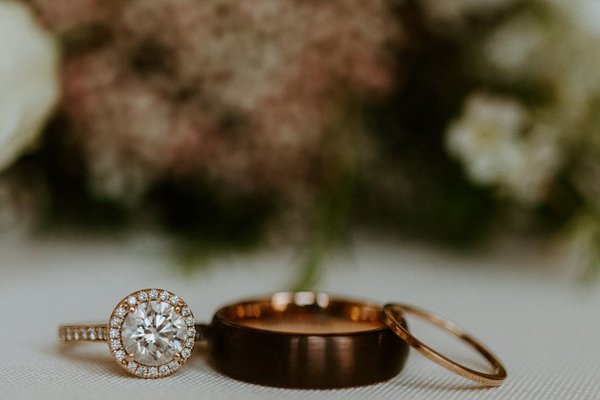
A hidden halo engagement ring rewards a second look. From above, the centre stone can appear almost like a classic solitaire or lightly detailed setting. Tilt the ring, though, and a circle of small diamonds becomes visible beneath the main stone. The extra sparkle is subtle, appealing to people who want refined detail without changing the face-up look of the centre stone.
What is a hidden halo setting?
A hidden halo setting places a row of small accent diamonds around the base of the centre stone, usually beneath its girdle. Unlike a traditional halo, which surrounds the centre stone when viewed from above, a hidden halo is mainly visible from the side. You may also see the style described as an under halo engagement ring because the accent diamonds sit below the main stone rather than around its outer edge.
Some hidden halos form a complete circle, while others follow an oval, cushion, pear or other centre-stone outline. The ring may combine this detail with a plain band, pavé shoulders or cathedral-style supports. These halo ring details can make similar rings look surprisingly different in profile.
Why people choose hidden halo engagement rings
They add sparkle without dominating the centre stone
The main appeal is visual balance. A traditional halo can make the top view look larger and more decorative. A hidden halo keeps the centre stone as the focus while adding flashes of light when the hand moves. If you like a solitaire appearance but find a completely plain basket too minimal, this is an attractive middle ground.
The side profile feels more finished
You notice the side while typing, holding a cup or looking down at your hand. A hidden halo ring gives that profile an intentional design feature instead of leaving the gallery purely structural.
It can personalise a familiar ring shape
Small setting details can make a familiar centre-stone shape feel more distinctive. A rose-gold hidden halo beneath a white-metal head, for example, can introduce discreet colour contrast, while a diamond-set under halo creates a brighter look without surrounding the stone from above.
The drawbacks are worth considering
More small stones mean more maintenance
A hidden halo usually contains multiple small diamonds held by tiny beads or prongs. Those components can be secure when properly made, but they add more points that may wear over years of daily use. Halo and pavé-style settings should be checked periodically because worn prongs can increase the risk of a small stone loosening.
Cleaning matters too. Hand cream, soap and everyday debris can collect beneath the centre stone and around the halo, dulling the sparkle. Gentle cleaning with warm water, mild soap and a soft brush is suitable for many diamond rings, although jeweller-specific care advice should take priority.
The setting can cost more than a simpler design
A hidden halo adds accent stones plus extra setting and finishing work, so it generally costs more than an otherwise similar plain solitaire. The difference reflects not only the small diamonds but also labour, metal structure, design complexity and brand pricing. Compare the total setting price rather than assuming every hidden halo carries the same premium.
Some versions sit higher on the finger
To make the hidden halo visible, certain designs use a higher basket or cathedral profile. A higher setting can look elegant, but it may catch more easily on clothing or gloves. People who work with their hands or prefer practical jewellery should compare the height carefully.
How to decide whether a hidden halo is worth it
Think about how the ring will look in ordinary life, not only in close-up photographs. Imagine two oval diamond rings with the same centre stone and plain band. One has a simple basket; the other has a hidden halo. From directly above they may look similar, but the second ring will flash more when viewed at an angle. If that side-view detail makes the ring feel noticeably more special to you, the extra cost may be worthwhile. If you rarely notice profile details, you may prefer to put the budget toward the centre stone, metal or a lower-set design.
Buying tips before choosing a hidden halo ring
Inspect the ring from the side
Do not judge the design only from a face-up photograph. Ask for side, three-quarter and underside views so you can see how exposed the small stones are, how high the centre stone sits and how the basket connects to the band. This is particularly useful online.
Ask how the accent stones are secured
Find out whether the hidden halo uses pavé, bead-set or small-prong-set diamonds and ask what maintenance the jeweller recommends. Tiny stones should look evenly spaced and securely seated, with no obvious gaps or rough metal edges.
Check wedding-band compatibility
Some under halo engagement ring designs project outward near the base of the centre setting. That can prevent a straight wedding band from sitting completely flush. If a gap would bother you, try the engagement ring with the type of band you expect to wear or ask whether the setting is designed for a flush fit.
Match the setting to your lifestyle
If you are very active, a lower and less intricate setting may be easier to live with. If you are comfortable with periodic professional inspections and careful wear, a more elaborate hidden halo setting can be a reasonable trade-off for extra sparkle. Related guides on choosing an engagement ring setting, diamond ring maintenance and wedding band pairing can help with the wider decision.
Frequently asked questions
Does a hidden halo make the centre diamond look bigger?
Not in the same way as a traditional face-up halo. Because the small diamonds sit below the centre stone, the effect is mainly extra side sparkle rather than a larger visible outline from above.
Are hidden halo engagement rings secure?
They can be secure when well made, but the small accent stones create additional setting points that need care. Regular inspections are sensible, particularly if the ring is worn every day or has received a knock.
Can a hidden halo be used with different diamond shapes?
Yes. Round, oval, cushion, pear, emerald and radiant cuts can all work with hidden halos. The basket must be engineered for the centre stone’s proportions, so adding one to an existing ring may require replacing or redesigning the setting.
Is a hidden halo hard to clean?
It needs slightly more attention than a plain solitaire because debris can collect around the small stones and beneath the centre setting. Gentle home cleaning plus periodic professional checks usually keeps it looking bright.
A subtle detail with a practical trade-off
Hidden halo engagement rings work best for buyers who love understated detail. They keep the top view focused on the centre stone while making the side profile more decorative and lively. The trade-off is extra cost, more small stones to maintain and, in some designs, a higher profile. Compare the setting from every angle, check how it pairs with a wedding band and choose the construction that fits your daily routine. When those practical details line up, a hidden halo can add exactly the quiet sparkle that makes a ring feel personal.