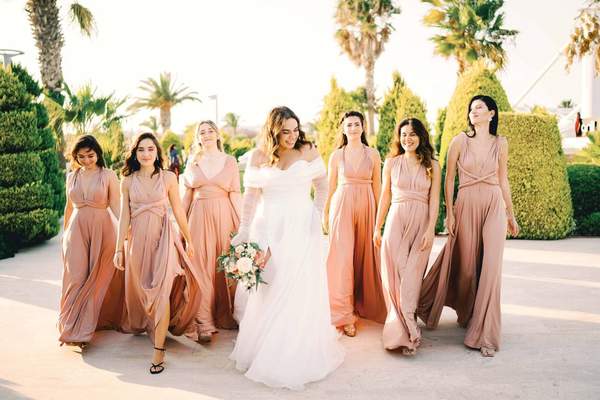
Mismatched bridesmaid dresses can look effortless in photographs, but the best combinations rarely happen by accident. Give everyone complete freedom and the result may feel disconnected; insist on too many rules and the individuality disappears. The sweet spot is a clear styling framework that lets each person feel comfortable while keeping the wedding party visually connected.
You do not need identical gowns, matching necklines, or one precise shade. You need a few shared decisions that make different bridesmaid dress styles feel like part of the same celebration.
Start With One Visual Anchor
Before anyone shops, choose what connects the dresses. That could be a narrow color family, consistent fabric, similar length, or shared formality. Select one strong anchor and one or two supporting rules rather than a long list of restrictions.
For instance, “floor-length dresses in soft blue shades, without sequins” gives people useful freedom. “Any pastel dress” may produce icy lavender, peach, yellow, and mint with little relationship. Consider the venue, flowers, season, and dress code when setting boundaries. Airy garden-party dresses and formal evening gowns create very different impressions.
Create a Deliberate Color Palette
Choose shades with something in common
Successful mix and match bridesmaid dresses often share an undertone or intensity. Dusty rose, mauve, and muted berry can feel connected because each is relatively soft. Terracotta, rust, and cinnamon form a warmer palette. One neon coral dress beside four subdued blush dresses, however, may look unintentionally out of place.
For many groups, two to four approved shades are easier to coordinate than an unlimited palette. You can repeat colors or assign them after seeing everyone’s options. Do not assume two retailers’ dresses called “sage” will match: dye, fabric, lighting, and photography can make the results noticeably different.
Compare real samples, not isolated screenshots
Gather swatches and place them together near a window. Check them outdoors if the ceremony will be outside. Photograph the samples side by side so the group can judge the complete palette. If ordering swatches is not possible, compare retailer photos taken in similar lighting and allow extra flexibility.
For more inspiration, explore bridesmaid dress color combinations before finalizing your choices.
Coordinate Fabric and Finish
Fabric affects how the same color appears. Satin reflects light, chiffon softens it, velvet adds depth, and matte crepe tends to look restrained. Five green dresses can appear more mismatched than expected when some are glossy and others textured.
If your palette includes several different colors, choosing fabrics with similar weight and finish can unite the group. If everyone wears nearly the same shade, varied silhouettes may create enough individuality without multiple competing textures. A deliberate fabric mix can work, but review it as a whole.
Keep formality in mind. A heavily embellished gown may not sit comfortably beside minimalist daytime dresses, however closely their colors match.
Allow Different Silhouettes Within One Dress Code
A major advantage of mismatched bridesmaid dresses is the freedom to choose flattering, practical cuts. One bridesmaid might love a square neckline; another may want sleeves, a wrap bodice, or supportive straps. Coordinated bridesmaid looks should accommodate different preferences rather than demand identical shapes.
Agree on an overall level of formality and a hemline range. Floor-length dresses usually create a more unified lineup at a black-tie wedding, while midi styles can suit a relaxed afternoon ceremony. Mixing lengths is possible, but should be intentional.
Also consider movement, suitable undergarments, and alterations. Bridesmaids will spend hours standing, sitting, and dancing. A comfortable fit is more valuable than making everyone copy one silhouette. A guide to bridesmaid dress styles for different body types offers a useful next step when narrowing options.
Introduce Prints With a Light Touch
Prints can add character to a garden wedding or romantic outdoor ceremony. One floral dress that contains the solid colors worn by the other bridesmaids can act as a visual bridge. If several people wear prints, aim for similar pattern scale and saturation rather than combining delicate flowers with bold geometric motifs.
Apply the same thinking to dramatic bows, sequins, cutouts, and high slits. None is automatically off-limits, but a single unexpected statement detail can shift attention away from the balanced lineup.
Use Accessories to Connect the Group
Accessories can quietly unify different bridesmaid dress styles. Similar shoe tones, understated jewelry, or bouquets with overlapping flowers create repetition without requiring identical outfits.
Be practical about footwear. Grass, gravel, and cobblestones may make thin heels unsuitable, so suggest a color family and allow comfortable heel heights or dressy flats. Bouquets are particularly helpful when dresses span several shades: shared greenery and flowers can echo the complete palette. A wedding party accessories checklist can make these final decisions easier.
Picture a Five-Person Garden Wedding
Imagine five bridesmaids at a late-spring wedding. Their approved palette is sage, muted eucalyptus, and olive green. Each chooses a floor-length dress with a soft, matte finish, but necklines vary according to comfort. Two select sage, two choose eucalyptus, and one wears olive.
When they compare swatches, the olive fabric looks much darker than expected. Rather than automatically replacing the dress, they repeat olive-colored foliage in the bouquets. The deeper shade now feels deliberate instead of isolated.
This is the practical value of building the look together. A small difference can become a design feature when it connects to another element of the wedding.
Give Everyone Freedom Without Losing Control
Share a concise reference board with approved colors, finishes, hemline guidance, and examples of details that will not work. Set a realistic budget and ordering deadline, with time for shipping, exchanges, and tailoring. Ask everyone to submit their intended dress for approval before paying.
Review the full lineup in one collage. Look for any piece that feels unusually bright, shiny, short, or formal. Avoid micromanaging minor differences that do not disrupt the group. The objective is a mismatched wedding party with a common aesthetic, not a set of near-identical dresses.
Frequently Asked Questions
Do mismatched bridesmaid dresses need the same length?
No, but keeping hemlines within one general range helps create a cohesive effect. If you mix midi and floor-length dresses, make sure the occasion and fabric choices still feel similarly formal.
Can bridesmaids order from different brands?
Absolutely. Review swatches when possible because similarly named shades can vary between brands. Consistent color character and formality matter more than matching labels.
How many colors should bridesmaid dresses include?
There is no universal rule. Two to four related colors are manageable for many parties, although larger palettes can work when fabric, length, or another detail provides continuity.
Should the maid of honor wear a different dress?
Only if you want that distinction. A deeper shade, subtle pattern, or different neckline can make the maid of honor recognizable without breaking the overall look.
Make the Differences Feel Intentional
The most attractive mismatched bridesmaid dresses are not simply different dresses placed next to each other. They share a visible connection. Begin with a thoughtful palette, decide what can vary, compare materials together, and approve the complete group before orders are final. Everyone can then wear something that reflects their own style while the wedding photographs still tell one cohesive story.