A proposal happens quickly: anticipation, the question, the reaction, and suddenly the couple is celebrating. The best proposal photos capture that whole sequence, not just the ring. A useful proposal photo checklist should help a professional photographer or a trusted friend tell the story without interrupting it.
Use these 20 proposal story photo ideas as a flexible shot sequence. The strongest engagement moment photos feel natural, showing the setting, the emotions, and the small details that made the proposal personal.
Before the Question
1. The Empty Proposal Setting
Photograph the location before the couple arrives. Include flowers, candles, a picnic setup, scenery, or another detail that explains the atmosphere. This gives the photo story a clear opening scene.
2. The Ring Before the Reveal
If it can be done safely, photograph the ring in its box before the proposal begins. This gives you a clean detail image without asking the couple to pause during their first emotional minutes afterward.
3. The Waiting Moment
Capture the proposer waiting, checking the path, fixing a sleeve, or taking a deep breath. These nervous details disappear the moment the other person arrives.
4. The Approach
Photograph the person being proposed to as they walk toward the location. A wider frame works well because it preserves the surroundings and builds anticipation.
The Proposal Itself
5. The First Look of Recognition
Watch for the instant when the surprise starts to register. A hand to the face, sudden smile, or confused glance can become one of the most memorable candid proposal shots.
6. The Drop to One Knee
This is the classic storytelling frame. Compose wide enough to include both people and enough of the setting to show where the moment happened.
7. The Expression During the Question
While the proposer speaks, focus on the listener’s face. Tears, laughter, disbelief, or stillness often communicate more than a posed portrait could.
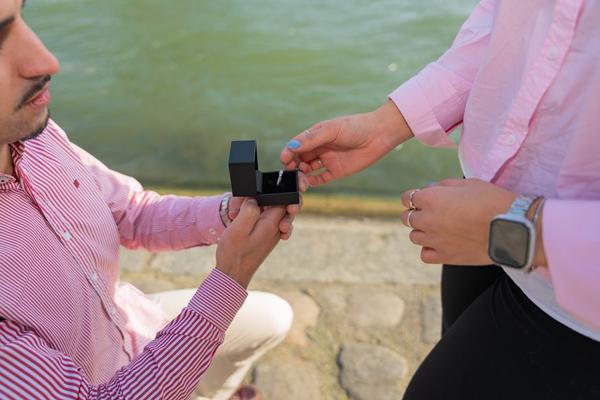
8. The Ring Reveal Photo
Try to include the open ring box and the recipient’s expression in the same frame. A strong ring reveal photo balances the jewellery detail with the emotion of seeing it.
9. The Answer
Capture the instant the answer is given. From a distance, visual cues such as nodding, laughing, reaching forward, or covering the mouth may tell the story better than words.
10. The Ring Going On
Photograph the ring being placed on the finger. A medium or close composition works well, but keep both people involved so the image still feels emotional rather than purely decorative.
The First Seconds After Yes
11. The First Hug
Do not interrupt the embrace to reposition anyone. Stay ready and let it unfold. This is often the moment when the nerves release and the emotion becomes most visible.
12. The First Kiss
Capture the kiss naturally if it happens. Avoid immediately calling for a pose; the spontaneous version will fit the candid proposal story much better.
13. The Look at the Ring
After the hug, many couples instinctively look down at the ring together. Photograph that shared glance as a quiet bridge between the proposal and the portraits that follow.
14. The Hands Together
Photograph the newly engaged hands side by side or intertwined. This gives the ring context and may also capture personal touches such as nail colour, a watch, or heirloom jewellery.
15. The Laugh-Through-the-Tears Moment
Keep shooting after the obvious milestones. A tear being wiped away, a burst of laughter, or a private look between the couple can become a favourite image.
Complete the Photo Story
16. The Wide Celebration Portrait
Once the couple has had a moment alone, take a wide portrait that includes the full environment. At a garden proposal, for example, include the path, trees, and floral setup instead of framing only two faces.
17. The Close Engagement Portrait
Follow the wide image with a tighter portrait. Ask the couple to stand close and look at each other first, which keeps the mood connected to the proposal rather than turning formal too quickly.
18. The Ring-in-Context Detail
Photograph the ring while the couple holds hands, embraces, or rests a hand on a partner’s shoulder. This feels more personal than an isolated jewellery image.
19. The Meaningful Location Detail
Capture one feature that explains the setting: a handwritten note, beach footprints, restaurant table, family keepsake, rooftop skyline, or sign. This detail helps the gallery preserve why the location mattered and can naturally support related content such as proposal planning tips or how he asked stories.
20. The Walking-Away Finale
Finish with movement. Photograph the couple walking away hand in hand or naturally leaving the proposal spot. It gives the gallery a closing scene instead of ending abruptly after the ring shot.
How to Avoid Missing the Key Moments
Choose your position before the couple arrives and make sure you can see both faces. During the actual proposal, prioritize the reaction, one-knee moment, ring placement, hug, and kiss before changing angles. Chasing variety too early is one of the easiest ways to miss an irreplaceable expression.
For example, at a lakeside proposal, start with the empty viewpoint and the proposer waiting. Photograph the partner approaching, then stay in one reliable position through the question and first hug. Only afterward should you move closer for hands, the ring, and portraits. If a friend is using a phone, burst mode can help during the fastest moments, while leaving extra space around the couple makes later cropping easier.
Frequently Asked Questions
What proposal photos are most important?
Prioritize the approach, reaction, one-knee moment, answer, ring placement, first hug, and a clear portrait afterward. Emotion and story matter more than decorative details.
How can I photograph a proposal without being noticed?
Choose your position in advance, avoid unnecessary movement during the approach, and use the surroundings for cover. A photographer with a longer lens can often work from farther away.
Should proposal photos be posed?
The proposal itself is usually best documented candidly. After the couple has had a few private minutes, simple prompts can create relaxed portraits without making the gallery feel staged.
How many proposal photos should I plan for?
Think in moments rather than a fixed final image count. This 20-shot framework covers the story, while photographers may capture several frames of each moment to protect against blinking, movement, or missed focus.
Capture the Whole Story
A memorable proposal gallery has a beginning, a turning point, and an ending. The ring matters, but so do the nervous wait, the surprised expression, the first embrace, and the quiet look afterward. Follow a clear shot sequence while leaving room for genuine reactions, and the final gallery will preserve how the proposal actually felt. Related topics such as engagement photo outfit ideas can help couples prepare for the portraits that come next.