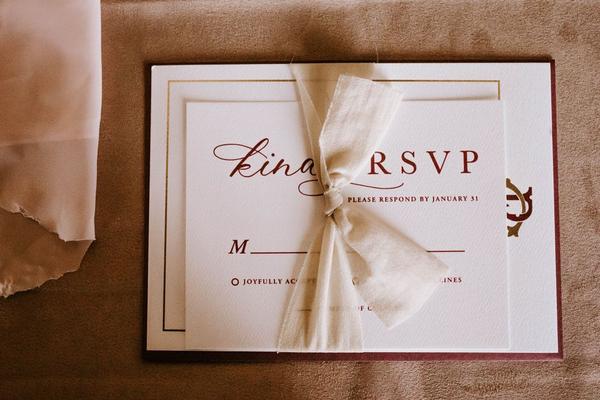
Your RSVP deadline is more than a date printed on a response card. It is the handoff point between inviting people and making final decisions about seating, catering, rentals, transportation, and other details that depend on an accurate headcount. A useful wedding RSVP timeline works backward from vendor deadlines while still giving guests enough time to make plans and respond.
For many weddings, setting the RSVP deadline about three to four weeks before the wedding is a practical starting point. Invitations are commonly sent roughly six to eight weeks before a local wedding, giving guests several weeks to reply. Destination weddings and events involving significant travel usually need an earlier schedule. The most important rule is to confirm the final guest count deadline in your own vendor contracts before choosing the date.
Build the RSVP Timeline Backward From Vendor Deadlines
Start with the least flexible deadline. Your caterer, venue, rental company, planner, or transportation provider may require final numbers anywhere from several days to a few weeks before the wedding. Do not assume every vendor uses the same date. Check each contract and identify the earliest firm deadline that depends on attendance.
Then create a buffer for late replies and unanswered invitations. If your caterer needs the final number 10 days before the wedding, setting your wedding RSVP deadline only 10 days before the event leaves no time for follow-up. A deadline three to four weeks before the wedding usually creates a more workable gap for chasing responses, confirming meal selections, and preparing the seating plan.
A Practical Example
Suppose your wedding is October 17 and the caterer needs the final guest count on October 7. You might set the RSVP deadline for September 19 or September 26. That gives you roughly 11 to 18 days to contact nonresponders, confirm plus-ones, resolve unclear meal choices, and submit a reliable count. The exact dates can shift, but the buffer is what protects the rest of your planning schedule.
When to Send Invitations
For a typical local wedding, sending invitations around six to eight weeks before the date is a widely used planning range. If the response deadline is three to four weeks before the event, guests generally have enough time to make plans without having such a long response window that the invitation gets forgotten.
For a destination wedding, holiday-weekend celebration, or event where many guests must travel, work farther ahead. Save-the-dates can provide early notice, while the formal invitation and wedding response timeline should still match travel realities and vendor requirements.
Choose One Clear RSVP Deadline
Use the same deadline everywhere guests may see it. The date on the invitation or response card should match the date on your wedding website. Avoid wording that creates two interpretations, such as asking for replies “by the end of September” in one place and listing September 30 elsewhere.
If you offer both online and mailed responses, explain the options simply. Mailed cards need transit time, so do not assume a guest is late the morning after the printed date. Online RSVPs arrive immediately, but you should still keep one master tracking list rather than juggling website entries, texts, emails, and paper cards separately.
Plan RSVP Follow Up Before the Deadline
A reminder does not need to feel pushy. A light message one to two weeks before the deadline can help guests who intended to respond but forgot. If you use a wedding website, the reminder can direct them to the correct RSVP page.
After the deadline, allow a short window for mailed cards to arrive, then contact anyone still missing. Keep the message friendly and specific: you are finalizing numbers and need their response by a particular date. The purpose of RSVP follow up is not to pressure someone into attending; it is to turn an unknown into a confirmed yes or no before vendor decisions become locked.
Check More Than the Headcount
Before sending final numbers to vendors, review the details behind every accepted invitation. Confirm attendance, plus-ones, and children where applicable. If you collected meal choices, allergies, accessibility needs, shuttle selections, or attendance for related events, check those fields too.
This is also the point when the guest list becomes useful for other planning tasks. Natural next steps include your wedding invitation timeline, seating chart planning, and day-of stationery checklist. Keeping those tasks connected reduces the chance that a late RSVP changes one document but not another.
Coordinate the Final Guest Count With Each Vendor
Do not automatically send the same number to everyone. Your venue may need total attendance, while the caterer may need adult meals, children’s meals, vendor meals, and dietary selections. A rental company may care about chairs and place settings, while transportation may need passenger counts by pickup location.
Ask whether small changes are allowed after the final guest count deadline and whether increases and decreases are handled differently. Some contracts lock in a minimum charge even if attendance drops. Knowing those rules before your RSVP deadline helps you make documented decisions rather than guessing during the final week.
Leave Room for Real-Life Changes
Even a carefully managed list can change. Illness, travel disruption, family emergencies, or childcare problems may cause cancellations. A guest who declined may later ask whether there is still space. Decide in advance who can approve late changes, especially if a planner or family member is helping manage responses.
Keep one master list and record every update immediately. A shared spreadsheet or planning tool can prevent the classic problem of a guest texting one person while the caterer is working from an older count. Your final numbers should come from one source of truth.
FAQ About Wedding RSVP Timing
How far in advance should the wedding RSVP deadline be?
For many weddings, three to four weeks before the event is a practical range. It leaves time to follow up with missing guests and complete vendor counts. Always compare your planned date with the deadlines in your venue and catering contracts.
Is one month before the wedding too early for RSVPs?
No. A deadline about a month before the wedding is common, especially when vendors require numbers well in advance. The key is making sure guests received their invitations early enough to make a decision.
When should I follow up with guests who have not responded?
You can send a gentle reminder one to two weeks before the deadline, then contact remaining nonresponders shortly after it passes. If you are waiting on mailed cards, allow reasonable delivery time first.
What if someone responds after final numbers were submitted?
Check with the affected vendors before promising that the change can be accommodated. Some can handle a small adjustment, while others may have already locked meals, rentals, staffing, or seating. Knowing the contract terms makes late changes easier to manage.
Keep the Timeline Connected
The best RSVP schedule connects every deadline instead of treating the response date as an isolated task. Work backward from vendor requirements, give guests a reasonable response window, leave time for reminders, and verify the details behind each yes. When those dates are aligned, your RSVP list becomes the reliable bridge between invitations and the final decisions that shape the wedding day.