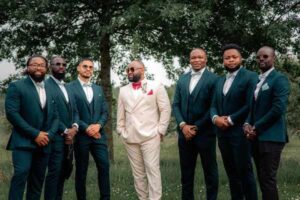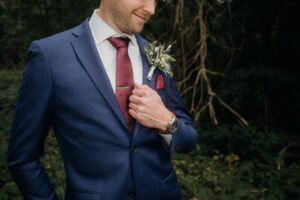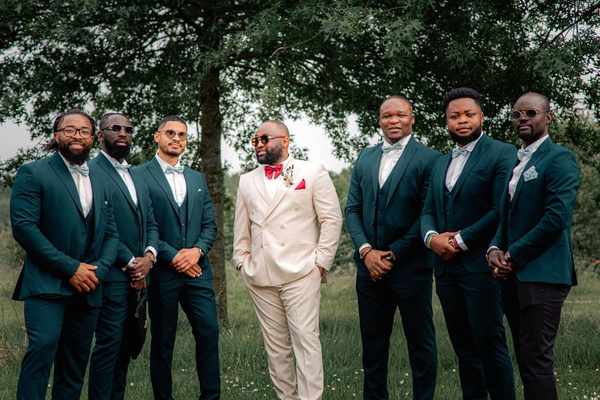
Matching groom and groomsmen suits can make a wedding party look beautifully connected. The challenge is finding that connection without making the groom disappear into a row of identical jackets. Fortunately, coordination does not require everyone to wear the same outfit from collar to shoes. The strongest looks share a foundation, allow individual fit, and give the groom one recognizable detail.
Think of the wedding party as a group portrait rather than a uniformed team. Color, fabric, formality, and accessories should feel related while each suit still suits the person wearing it.
Decide What Should Match First
Start with the wedding’s dress code, venue, and overall palette. A formal evening celebration calls for different clothes than a relaxed garden ceremony in warm weather. These conditions should guide the suits before anyone falls in love with a particular shade.
The simplest formula for coordinated wedding suits is consistent formality, related fabrics, and a shared color family. Keep one or two elements flexible so the group looks deliberate without feeling identical.
Keep the dress code consistent
Putting the groom in formal eveningwear and the groomsmen in casual linen suits may create an awkward visual gap. If the wedding is black tie, coordinate appropriate eveningwear across the party. Otherwise, keep everyone in suits of comparable formality. A guide to wedding suit styles can help couples settle that decision before shopping.
Choose Groom and Groomsmen Colors That Work Together
Three approaches work well: use the same shade for every suit, dress the groom in a deeper or lighter version, or pair complementary neutrals. Navy with medium blue, charcoal with light gray, and brown with tan are possible combinations. The venue and wider wedding palette determine which feels right.
Try describing the plan in one sentence: “The groomsmen wear medium-gray suits, the groom wears charcoal, and everyone wears white shirts and brown shoes.” That gives the matching wedding party a clear identity without demanding exact duplicates.
Compare actual fabric swatches rather than relying on online color names. One retailer’s navy may be brighter than another’s. View samples together in daylight and, if possible, under lighting similar to the reception venue. This matters especially when people buy from different shops.
Use Fabric and Tailoring to Create Unity
Identical colors can look mismatched when one fabric is shiny and another is matte. Aim for a compatible finish and weight. Smooth wool or wool blends suit many dressier events; lightweight, breathable fabrics work well in warmer settings, while textured cloth can complement cooler-season weddings.
Exact fabric matching is easiest through one rental or retail collection, but it is not essential. If groomsmen wear suits they already own, ask for a similar finish rather than insisting on the same brand.
Allow individual tailoring. One person may need a roomier jacket while another prefers a slimmer cut. Neat shoulder lines, comfortable buttoning, and properly hemmed trousers matter more than identical silhouettes. See how a wedding suit should fit for a closer look at alterations.
Make the Groom Stand Out Without Changing Everything
The groom should be recognizable in photographs without looking dressed for another occasion. Choose one or two points of distinction, then let the remaining details connect him to the group.
Try a waistcoat or subtle suit contrast
If everyone wears navy, the groom might add a coordinating waistcoat while the groomsmen wear two-piece suits. A deeper navy shade or a different lapel treatment can work too. One deliberate difference is often more effective than changing every part of the outfit.
Choose a special tie or pocket square
Keep the shirts consistent, then give the groom a distinct tie color or texture. He might wear ivory while the groomsmen wear muted sage. Pocket squares can repeat those colors without matching the ties exactly. Too many competing accents can overwhelm otherwise thoughtful suit coordination.
Use boutonnieres to signal his role
Give the groom a slightly fuller boutonniere related to the main wedding flowers, with smaller arrangements for the groomsmen. Keep every flower appropriately sized so it sits neatly on the lapel.
A Practical Summer Garden Wedding Example
Imagine a late-afternoon ceremony with cream and sage-green flowers. Four groomsmen wear light-tan suits in similarly matte fabrics, white shirts, medium-brown shoes, and sage ties. The groom wears a slightly deeper taupe suit, a white shirt, brown shoes, and a cream tie.
Everyone has a boutonniere, but the groom’s includes an additional cream bloom. The shirts, footwear, and suit tones create a shared look; his deeper shade and accessories make his role clear. Nobody looks copied and pasted.
Before ordering, lay swatches and accessories together and take a phone photo. A combination that looks harmonious on individual product pages can clash when placed side by side.
Give Groomsmen Clear, Affordable Instructions
A good plan can unravel when everyone receives vague directions. Instead of saying “buy a blue suit,” send a short reference sheet with the preferred shade, fabric finish, shirt, tie, shoe color, and any details they may choose themselves.
Include a sample image, where to buy or rent, an agreed budget, and the date each person should confirm their outfit. Check whether the chosen collection has suitable sizes. Discuss affordable alternatives early rather than surprising anyone with a costly requirement.
Leave time for deliveries, exchanges, and alterations. Ask anyone shopping remotely to share a well-lit photo of the complete outfit before the final week. For more accessory inspiration, groomsmen tie and pocket square combinations is a useful companion topic.
Finally, compare the complete outfits under similar lighting. Watch for navy shades that turn nearly black, mismatched shoe tones, and accessories that compete with the flowers. Comfort matters too: everyone should be able to sit, walk, and celebrate without constant adjustments.
Frequently Asked Questions
Should the groom wear the same suit as the groomsmen?
He can. A waistcoat, distinctive tie, or special boutonniere may be enough to set him apart. A different suit shade is optional, not essential.
Can groomsmen wear different suit cuts?
Yes. Different cuts accommodate different body types. Keep the color, fabric finish, and formality aligned, then tailor each suit for comfort.
Do the ties and shoes all need to match?
No, although matching tie colors and shoe tones create a tidy effect. Agree on acceptable variations before shopping so differences appear intentional.
What if the groom prefers a different suit color?
Choose a shade that complements the group’s suits and repeat a shared detail, such as the shirt or flowers. Compare real fabric swatches before purchasing.
Bring the Whole Look Together
The best matching groom and groomsmen suits share a visual rhythm without erasing personality. Set the formality first, build a simple color story, choose compatible fabrics, and prioritize individual fit. With one or two thoughtful differences reserved for the groom, the wedding party will look connected while everyone still feels like himself.