At a Jewish wedding, familiar moments often carry several layers of meaning. A canopy marks the creation of a home, a marriage document speaks to responsibility, and the sound of breaking glass interrupts an otherwise joyful occasion. Understanding these Jewish wedding ceremony traditions makes the celebration more meaningful for couples and guests alike. Yet there is no single script followed by every Jewish family. Customs differ among Ashkenazi, Sephardi, Mizrahi, Orthodox, Conservative, Reform, and other communities, and individual couples make thoughtful choices within those traditions.
Before the Ceremony: Commitments and Preparation
The ketubah: A marriage agreement
The ketubah is a Jewish marriage document, usually signed before the ceremony in the presence of witnesses. Historically, its terms established obligations of a husband to his wife, including financial protections. In traditional Jewish practice, its legal wording and requirements remain important. Many contemporary couples instead use, or add, an egalitarian text describing mutual care, loyalty, and the home they hope to build. Couples should discuss appropriate wording and witnesses with their officiant before ordering the document.
Bedeken and other pre-wedding customs
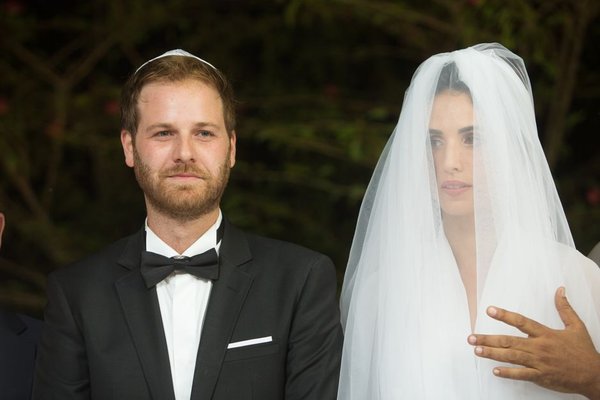
At some traditional Ashkenazi weddings, the bedeken is a veiling ritual in which the groom places a veil over the bride’s face. Explanations connect it with the biblical story of Jacob, Leah, and Rachel, as well as themes of dignity and commitment. Not every Jewish wedding includes a bedeken, and couples may adapt it or choose a different moment of blessing.
Other preparations can include a groom’s gathering known as a tisch, welcoming ceremonies, or an aufruf in the synagogue before the wedding. These practices are meaningful in some communities but should not be mistaken for universal requirements.
The Chuppah: A Home Open to Others
The chuppah ceremony takes place beneath a canopy, often cloth supported by four poles. The chuppah symbolizes the home the couple will create. Its traditionally open sides suggest hospitality: marriage establishes a household without shutting out relatives, friends, or community. Some couples use a treasured family tallit, or prayer shawl, as the covering; others choose a textile made especially for the occasion.
Circling before the blessings
Circling is customary at some Ashkenazi weddings. Traditionally, the bride may circle the groom seven times, although other numbers occur. Interpretations connect the circles with creation, protection, and forming a shared life. Some egalitarian couples circle one another or walk a final circle together; others omit the custom. Sephardi and Mizrahi practices may follow different patterns, so circling should not be presented as an essential step at every Jewish wedding.
Wine, Rings, and the Two Parts of Marriage
The central ceremony traditionally joins two stages once held separately: kiddushin, also called erusin, and nissuin. The first establishes the marriage bond; the second marks the couple’s entry into married life. Blessings over wine, or sometimes grape juice, commonly accompany these moments, highlighting joy and the sacred character of the occasion.
In a traditional kiddushin ceremony, the groom gives the bride a ring and recites a Hebrew declaration of consecration. Other Jewish communities and contemporary officiants use reciprocal rings, adapted language, or additional vows. A ring exchange might look familiar to guests from many backgrounds, but the words and religious framework give it a specifically Jewish meaning.
Reading the ketubah and the seven blessings
The ketubah is often read aloud, at least in part, between kiddushin and nissuin. This allows the community to witness the responsibilities associated with marriage. The length and language of the reading vary; at some Sephardi ceremonies, selected portions are read rather than the entire text.
Nissuin includes the sheva brachot, or seven blessings. They praise creation, celebrate human relationships, and express hopes for love, companionship, and communal joy. The blessings are traditionally recited over wine, sometimes by different honored guests. Their themes place the couple’s happiness within a wider story of family and Jewish community. Some liberal ceremonies adapt the wording or incorporate additional readings while retaining the blessings’ central spirit.
Why Breaking the Glass Matters
Few Jewish wedding traditions are as instantly recognizable as the final smash. During the breaking the glass wedding ritual, one partner traditionally steps on a wrapped glass; some couples share the moment. Guests often respond with “Mazel tov!”—an expression of congratulations—and the celebration begins.
The glass has more than one interpretation. A longstanding explanation remembers the destruction of the Temple in Jerusalem, allowing collective sorrow to remain present even during personal happiness. Others see a reminder that relationships are fragile and deserve care. There is no need to insist on one exclusive meaning. For safety, the glass should be securely wrapped or placed in a suitable protective pouch before it is broken.
After the Chuppah: Privacy and Celebration
Some couples spend a few private minutes together immediately after the ceremony in a practice called yichud. In traditional observance, this seclusion has a particular religious significance; in other settings, couples may simply appreciate a quiet moment before greeting everyone. A festive meal, music, and dancing generally follow. At some celebrations, guests lift the newlyweds on chairs during the hora, although that dance is not universal.
How Customs Change Across Communities
Different Jewish wedding ceremonies can be equally rich in meaning without looking identical. Orthodox weddings generally follow traditional halachic, or Jewish legal, requirements. Conservative and Reform ceremonies may differ in their approach to ritual language, participation, and marriage documents. Sephardi and Mizrahi families bring distinctive music, clothing, processions, and local customs. LGBTQ+ and interfaith couples may work with supportive officiants to shape ceremonies that honor their identities and traditions.
For couples planning a ceremony, the most useful question is not “Which customs must every Jewish wedding have?” but “Which customs belong to our family, community, and religious practice?” Ask the officiant to explain the sequence and identify any elements with specific legal or religious requirements. A short printed program can define terms such as ketubah, chuppah, and sheva brachot for guests unfamiliar with them. It also prevents guests from mistaking a family’s particular version for the only authentic one.
Frequently Asked Questions
Does every Jewish wedding include a chuppah?
A chuppah is widespread and especially significant in traditional ceremonies, but weddings differ by community, observance, and couple. Ask the officiant about the requirements and customs relevant to a particular ceremony.
Why are there seven blessings at a Jewish wedding?
The sheva brachot celebrate creation, humanity, companionship, and the couple’s joy. They also connect a private commitment with the happiness and hopes of the wider community.
Can couples personalize Jewish wedding traditions?
Many do, through readings, music, family textiles, reciprocal rituals, and ketubah language. The possibilities depend on religious affiliation and the officiant’s approach, so meaningful changes are best discussed early.
A Ceremony Rooted in Meaning
Jewish wedding ceremony traditions tell a story of commitment through actions as much as words. The ketubah names responsibilities, the chuppah imagines a welcoming home, blessings celebrate partnership, and the broken glass asks people to remember a world beyond the wedding day. Learning what each ritual means—and where interpretations differ—offers a more respectful way to witness or plan the occasion.