A printed wedding RSVP card has limited space, yet it needs to answer several practical questions: Who is coming? What will they eat? Is an invited plus-one attending? The best wedding invitation RSVP card wording gathers those answers without making guests decode tiny text or complicated instructions. These examples give you space-efficient language for a physical response card while keeping the tone personal.
What Every Wedding Reply Card Should Include
Begin with four essentials: a clear reply-by date, guest names, an attendance choice, and a return method. Add meal selections only if your caterer needs them. If your invitation includes a guest or family members, make space for their names too. A small card works best when each line has one obvious purpose.
“Please reply by 14 May” is clearer than “Respond soon.” Choose your deadline by checking when your venue needs its final guest count, then allowing time to contact anyone who hasn’t replied. Several weeks before the wedding is common, but your suppliers’ actual deadlines matter more than a universal rule. Our wedding RSVP deadline guide can help with the timeline.
Wedding Response Card Wording Examples
Formal and Traditional
“The favour of a reply is requested by 14 May.”
“Name(s): __________________”
“___ Joyfully accepts ___ Regretfully declines”
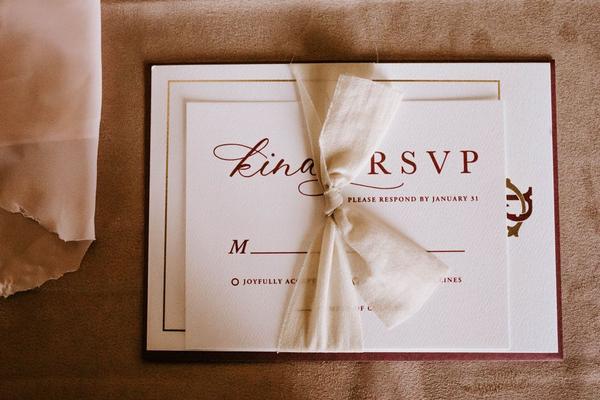
This familiar style suits a formal invitation suite. You can use the traditional “M________” name line, but spelling out “Name(s)” feels more intuitive to guests who have never completed a formal response card.
Modern and Minimal
“Please RSVP by 14 May.”
“Guest name(s): __________________”
“___ Will attend ___ Unable to attend”
This is an ideal starting point when the card also needs meal checkboxes. It communicates everything important in a few words and leaves room for readable handwriting.
Warm and Playful
“We hope you’ll celebrate with us! Please reply by 14 May.”
“Name(s): __________________”
“___ Can’t wait! ___ Sorry to miss it”
Personality is welcome, provided the responses still represent a definite yes or no. Avoid two clever phrases that could both mean the guest intends to attend.
RSVP Meal Choice Wording That Works
For a plated dinner, try: “Please select one meal for each attending guest: Chicken / Fish / Vegetarian.” If a couple might choose different meals, add individual lines: “Guest name: ______ Meal: ______.” You can print two lines where two people are invited, or leave a larger space for guests to write both names with their choices.
Here’s a real-world test: Alex chooses fish and Sam chooses vegetarian. A card with two checked boxes but no names tells the caterer the quantities, not who receives each plate. That may be fine if your caterer wants totals only, but assigned plated service typically benefits from named selections. Confirm the format with your caterer before ordering stationery.
Keep descriptions short and choices distinct. If a menu offers numerous options, a larger card or separate insert may be easier than squeezing six tiny boxes below the attendance line. Don’t request meal choices for guests who decline.
How to Handle Plus-Ones and Family RSVPs
Good RSVP plus one wording starts on the invitation envelope. Name both invited people, or address the invitation to the named guest “and Guest” when an additional person is genuinely welcome. On the card, ask for “Names of attending guests: ______.” This captures a companion’s name for your seating plan without suggesting that everyone may bring someone.
You can also print “___ of 2 invited guests will attend,” adjusting the number for each household. For a family of four, use “___ of 4 invited guests will attend” alongside a name line. This is clearer than “Number attending: ___,” which might accidentally imply an unlimited guest count. Our wedding invitation wording for families guide can help you address envelopes consistently.
If children aren’t invited, explain that sensitively on the invitation or details card, not through an unexplained number on the RSVP. Guests should know who is included before they begin filling out their reply.
Dietary Needs and Optional Questions
A useful addition is “Dietary requirements or allergies: __________.” Keep it separate from meal selection because choosing a vegetarian dish does not necessarily identify an allergy. Share the information with your caterer and confirm available accommodations rather than assuming each request can be met.
Song requests, accommodation questions, and personal notes can be charming, but they’re secondary. If space is tight, collect them through your wedding website. A generous name line and two clear checkboxes are more valuable than five fields nobody can write in.
Design the Card for Handwriting, Not Just Appearance
Arrange information in the order guests use it: reply date, names, attendance, meals, then special requirements. Print a sample at actual size and complete it with an ordinary pen. Check that someone with a long surname can fit their name and that meal labels remain readable.
For example, a card measuring roughly 3.5 by 5 inches may fit a brief attendance section and three meal options, depending on typography. Treat that as a layout test rather than a required dimension. If you plan to use return envelopes, confirm that the finished card fits comfortably. Our wedding invitation enclosure card ideas offer further ways to distribute information neatly.
Small Wording Mistakes That Cause Big Confusion
A missing deadline creates unnecessary follow-ups. An unlabeled blank makes guests wonder what to write. A “plus-one name” field on every card may imply extra invitations you never intended. And asking guests to choose meals without linking selections to people can complicate seating and service.
If you offer both paper and online replies, state the options clearly and reconcile them against one guest list. Above all, have someone unfamiliar with your wedding complete a proof card. Their questions will expose unclear wording before you print dozens of copies.
Frequently Asked Questions
What should a wedding RSVP card say?
Include a reply deadline, space for invited guest names, and unmistakable acceptance and decline choices. Add meal preferences, invited guest counts, or dietary needs only when those details help you plan the event.
How do you word an RSVP for a plus-one?
Make the invitation itself clear about who is invited. On the card, write “Names of attending guests” and, if helpful, “___ of 2 invited guests will attend.” Customize the number rather than giving every household the same allowance.
Should RSVP cards ask about food allergies?
They can. A short “Dietary requirements or allergies” line helps collect important details, especially for a plated meal. Follow up if a response is unclear and consult the caterer about safe, practical accommodations.
When should the RSVP deadline be?
Work backward from your venue’s and caterer’s final headcount dates, leaving a buffer to chase missing replies. State one exact calendar date prominently on the card so guests know when to return it.
A Clear Reply Is the Best Result
Choose wedding response card wording that sounds like you, but make clarity the priority. When guests can quickly identify their invitation, confirm attendance, and record any required meal choices, you get cleaner responses and fewer awkward follow-up messages. The most elegant wedding reply card is one that’s genuinely easy to use.